Optimizing the Human Foundation
The Challenge: Cognitive fatigue, developmental stalls, and the depletion of neuro-vitality in parents, children, students, and employees.
The Research: Bio-Social Feedback Loops. Our investigative framework examines how to architect environments—from homes and schools to workplaces—that prioritize neurological readiness and holistic health. While our research naturally encompasses the benchmarks of ISO 7101:2023 (Healthcare Quality), ISO 45001 (Occupational Health and Safety), and ISO 45003 (Psychological Health at Work), we use these standards as a baseline to explore deeper systems that actively nourish the brain and body. By further integrating ISO 21001 (Educational Organization Management), our research identifies how cognitive-load management and physiological feedback can be embedded into lifelong learning environments. This evidence-based approach directly advances SDG 3 (Good Health and Well-being) by shifting the focus from treating illness to researching the environmental foundations of human vitality.
Key Outcome: A high Childhood Flourishing Index and sustained cognitive vitality for all ages.
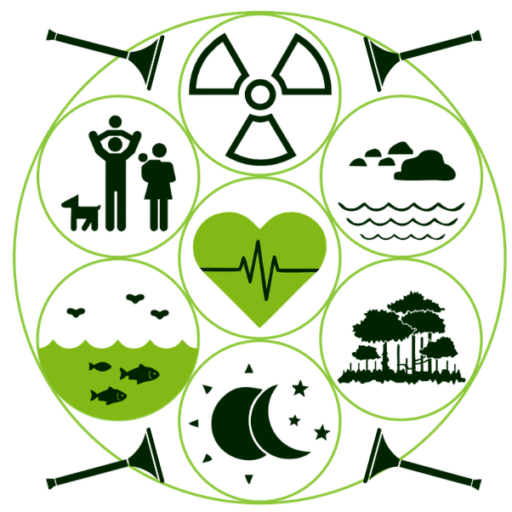
Empowering Every Nation, Kindred, Tongue, & People
Real Research provides the architectural blueprint for every layer of life. We are not to offer fragmented “fixes”; we are to deliver systemic solutions that harmonize the biological foundation of the individual with the ecological stability of the planet.
RESEARCH ACROSS THE CONTINUUM OF EXISTENCE
Truly Holistic. Simply Evident
THE ALL-LEVEL FRAMEWORK
Optimizing the Human Foundation
The Challenge: Cognitive fatigue, developmental stalls, and the depletion of neuro-vitality in parents, children, students, and employees.
The Research: Bio-Social Feedback Loops. Our investigative framework examines how to architect environments—from homes and schools to workplaces—that prioritize neurological readiness and holistic health. While our research naturally encompasses the benchmarks of ISO 7101:2023 (Healthcare Quality), ISO 45001 (Occupational Health and Safety), and ISO 45003 (Psychological Health at Work), we use these standards as a baseline to explore deeper systems that actively nourish the brain and body. By further integrating ISO 21001 (Educational Organization Management), our research identifies how cognitive-load management and physiological feedback can be embedded into lifelong learning environments. This evidence-based approach directly advances SDG 3 (Good Health and Well-being) by shifting the focus from treating illness to researching the environmental foundations of human vitality.
Key Outcome: A high Childhood Flourishing Index and sustained cognitive vitality for all ages.
Architecting Relational Resilience
The Challenge: The global loneliness epidemic and the erosion of ‘Social Capital’ essential for community safety, encompassing the breakdown of cohesion within families, local communities, and public trust.
The Research: Propinquity Engineering. Our research focuses on developing community infrastructures and social protocols that foster natural human connection and social cohesion. While our methodology inherently satisfies the benchmarks of ISO 37101 (Sustainable Communities), ISO 26000 (Social Responsibility), and ISO 30415 (Diversity and Inclusion), these standards serve as the foundation for our deeper exploration into rebuilding the ‘connective tissue’ between families and the public. By investigating these frameworks, we identify how to bridge social gaps and reduce inequalities, directly advancing the 2026 targets for SDG 5 (Gender Equality) and SDG 10 (Reduced Inequalities) to ensure inclusive growth in all civic environments.
Key Outcome: Verifiable Social Cohesion Scores and a restored sense of belonging and public trust.
Governing Ecological Stability
The Challenge: Industrial and human systems breaching the critical boundaries of climate stability, biodiversity, and the circular economy that sustain life.
The Research: Nested Regenerative Protocols. Our investigative framework explores how human and industrial activity can be systematically ‘nested’ within absolute environmental limits. Our research methodologies encompass the core requirements of ISO 14001:2026 (Environmental Management) and ISO 50001 (Energy Management), using these as data-rich baselines to identify when ecological thresholds are approached. While these standards provide the structure, our focus is on developing predictive models for automatic industrial pauses or regenerative shifts that go beyond mere compliance to actively restore natural systems. This research directly supports the critical ecosystem targets of SDG 6 (Clean Water), SDG 12 (Responsible Consumption), SDG 13 (Climate Action), SDG 14 (Life Below Water), and SDG 15 (Life on Land).
Key Outcome: Real-time alignment with the Planetary Boundaries Dashboard and absolute ecological stability.
Driving Dignity
The Challenge: Value-extractive organizations, economies, and supply chains that drive growth by depleting human health and happiness.
The Research: The Wellbeing Economy Model. Our investigative methodology evaluates how organizations and local economies can effectively transition to ‘Good Work’ frameworks that prioritize human and planetary health. Our research inherently covers the benchmarks established by ISO 9001:2026 (Quality Management) and ISO 37001 (Anti-Bribery), though our focus remains on the qualitative impact of these systems rather than mere compliance. To validate long-term resilience and ethical sourcing, our models integrate the core tenets of ISO 22301 (Business Continuity) and ISO 20400 (Sustainable Procurement). By auditing these systems alongside ISO 45003 (Psychological Health at Work), we assess their capacity to provide a net-positive ‘Vitality Contribution’ to the public, directly advancing the targets of SDG 1 (No Poverty), SDG 8 (Decent Work and Economic Growth), and SDG 9 (Industry, Innovation, and Infrastructure).
Key Outcome: A measurable Return on Wellbeing (ROW) and universal dignity.
Securing Intergenerational Justice
The Challenge: Short-term decision-making by leadership, boards, and global bodies that ‘borrows’ from the future to pay for the present.
The Research: All-Generation Stewardship. Our methodology centers on a proprietary decision-filtration process where policy is validated only when it serves the interests of all generations. While our internal research naturally encompasses the benchmarks of ethical governance and anti-bribery, these standards serve as a baseline for our deeper pursuit of aligning leadership with the Social Progress Index (SPI). Our framework is inherently resilient and secure, exceeding the operational requirements of risk management and information security to safeguard our findings. Ultimately, our research is driven by a commitment to SDG 16, building a legacy of institutional integrity that transcends mere regulatory compliance
Key Outcome: Strategic policies that protect future children while stabilizing current Social Progress Rankings.
CROSS-LEVEL SYNERGY: THE FRACTIONAL CATALYST
Existence is too complex for a single specialist. Our Fractional Leadership Catalysts (Chief Systems Officers) act as the bridge between these levels. They ensure that a solution at the Economic level does not break the Biological or Planetary levels.
Scalable: Deployable for small community boards, corporate C-suites, or national agencies.
CHOOSE YOUR ENTRY POINT INTO THE CIRCUIT
Every level of existence is an opportunity for excellence. Where will you begin?
Biological & Social Assessment | Planetary Impact Validation | Economic & Governance Audit
Contact us for more details, to organize a forum, or to inquire about our services.